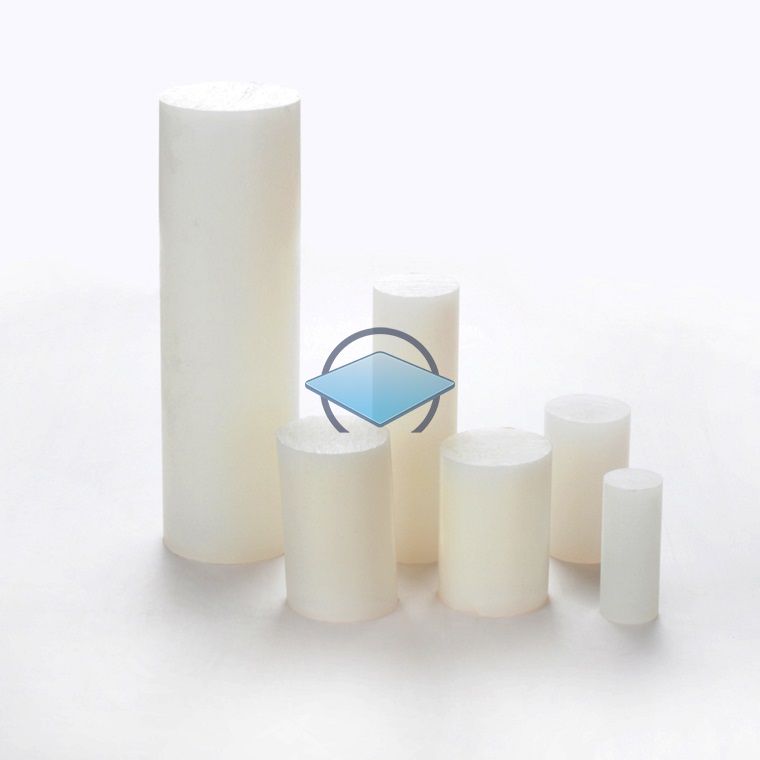
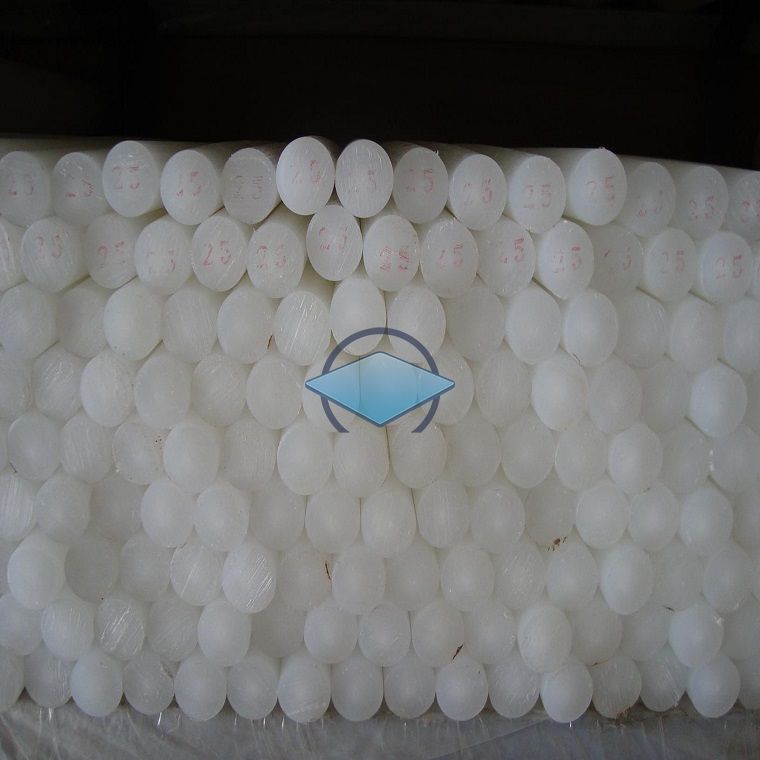
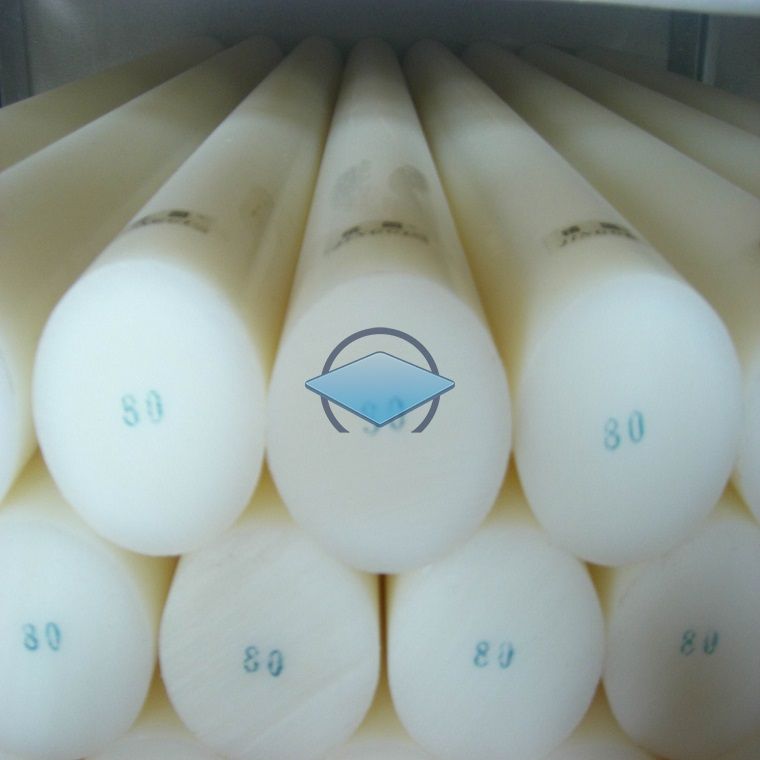
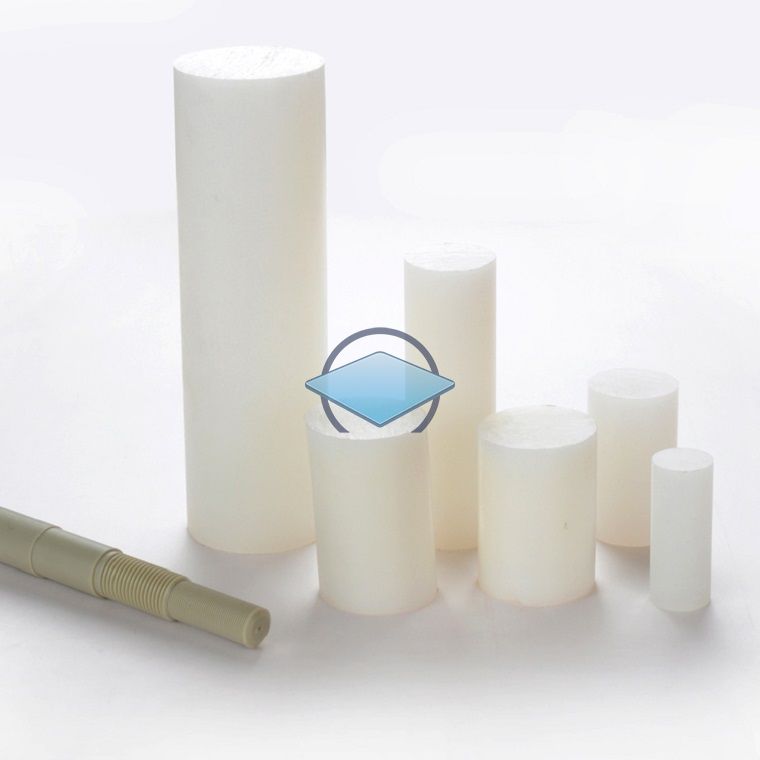
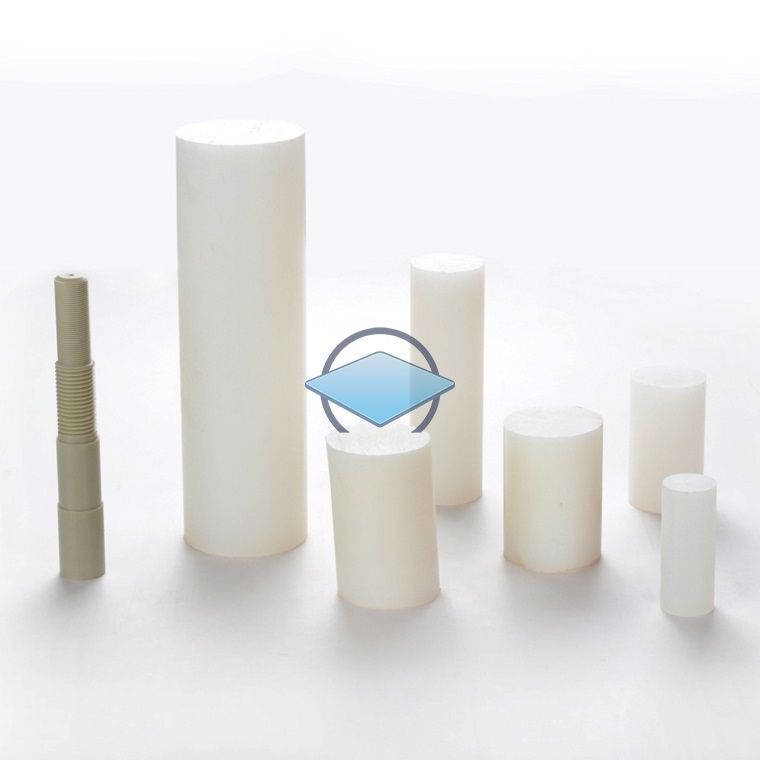
**HDPE Rod (High-Density Polyethylene Rod)** is a plastic profile made from High-Density Polyethylene,
featuring the following core product characteristics:
**1. Physical Properties**
* **Lightweight:** Density is approximately 0.94-0.97 g/cm³, slightly higher than PP but lower than Nylon and POM,
still classified as a lightweight material.
* **Temperature Resistance:** Short-term temperature resistance up to 80-100°C.
Long-term operating temperature range is -50°C to 60°C. Maintains flexibility at low temperatures (no brittle fracture).
* **Color and Specifications:** Common colors are white, black, or gray; customizable.
Diameter typically ranges from 5-200mm, length from 1-3 meters.
* **Surface Characteristics:** Smooth surface, non-porous, stain-resistant, and easy to clean.
**2. Chemical Properties**
* **Corrosion Resistance:** Excellent resistance to acids, alkalis, salts, and most solvents (e.g., hydrochloric acid, sulfuric acid, alcohol).
However, it is susceptible to attack by strong oxidizing acids (e.g., concentrated nitric acid) and certain organic solvents (e.g., gasoline).
* **Environmental Stress Cracking Resistance:** Superior stress crack resistance compared to ordinary polyethylene (LDPE),
suitable for long-term load-bearing environments.
* **Low Water Absorption:** Water absorption rate < 0.01%. Dimensional stability is maintained in humid environments,
with performance virtually unaffected.
* **Environmental Friendliness:** Non-toxic, recyclable, meets food-grade standards (FDA), suitable for food contact applications.
**3. Mechanical Properties**
* **High Impact Resistance:** Maintains excellent toughness even at low temperatures,
with impact resistance far exceeding common plastics like PP and PVC.
* **Wear Resistance:** Although surface hardness is relatively low, it exhibits good wear resistance,
suitable for low-speed friction applications.
* **Creep Resistance:** Minimal deformation under long-term load, with better creep resistance than ordinary polyethylene.
* **Flexibility:** Combines rigidity with moderate flexibility, capable of withstanding some deformation without easily breaking.
**4. Processing Performance**
* **Easy to Machine:** Can be processed through cutting, drilling, turning, etc., but sharp tools are required (to avoid material smearing).
* **Thermoformability:** Softens and can be shaped when heated to 120-135°C, with good shape stability after cooling.
* **Weldability:** Supports hot melt welding, hot gas welding, and extrusion welding, resulting in high weld strength.
* **Injection Molding and Extrusion:** Processing temperature range is 160-260°C. The melt has good fluidity, suitable for forming complex structures.
**5. Application Areas**
* **Industry:** Chemical storage tanks, acid/alkali transfer pipes, valve linings, anti-corrosion equipment.
* **Environmental Protection:** Components for sewage treatment equipment, garbage bins, recycling containers.
* **Food and Medical:** Components for food processing machinery, cutting boards, liquid packaging containers.
* **Daily Use Items:** Outdoor furniture, toys, sports equipment, packaging materials.
* **Special Scenarios:** Components for low-temperature environments (e.g., cold storage equipment), moisture-proof insulating parts.
**6. Limitations**
* **Insufficient Temperature Resistance:** Prone to softening and deformation at high temperatures (>80°C),
unsuitable for high-temperature load-bearing applications.
* **Relatively Low Strength:** Tensile strength (20-30 MPa) is significantly lower than engineering plastics like Nylon and POM.
* **Moderate Weather Resistance:** Prolonged exposure to UV radiation can cause aging; requires UV stabilizers.
* **Low Surface Hardness:** Easily scratched by sharp objects, unsuitable for high-precision wear-resistant components.